
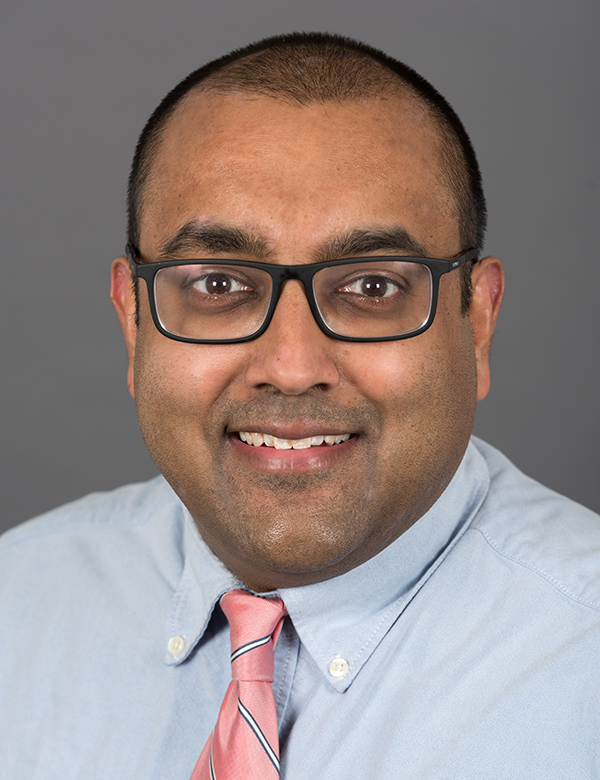
 ASPN Member of the Month is highlighting Dr. Amar Majmundar. Dr. Majmundar is being recognized for his impactful research in kidney genetics and his leadership within the nephrology community, particularly in the area of clinical genetic testing for kidney disease.
Introduction and current role
I am a pediatric nephrologist and physician-scientist at Boston Children’s Hospital and Harvard Medical School. Clinically, I see general nephrology patients and also direct our Kidney Genetics Clinic to help facilitate molecular genetic diagnoses and counseling for families with kidney disease. Most of my time is spent leading an NIH-supported translational research laboratory investigating monogenic forms of kidney disease in cellular and mouse models.
Clinical and research interests
Clinically, in addition to practicing general nephrology, I have made kidney genetics a major focus of my clinical time to help establish genetic diagnoses for children with kidney disease, especially where it can be impactful for their care and for their families. I am also very interested in facilitating the adoption of genetic testing into nephrology more broadly, co-leading a new educational interest group with ASPN and serving on a working group with the American College of Medical Genetics to establish guidance around genetic testing in nephrology.
My research has focused on the discovery and molecular dissection of genetic forms of pediatric kidney disease, with a particular focus on genetic forms of nephrotic syndrome and FSGS. My lab has investigated actin regulatory and other signaling pathways that regulate podocyte homeostasis and are impacted in disease. We have also studied how genetic disease variants in an FSGS disease gene, TRIM8, impact disordered regions of that protein and a fundamental mechanism of cellular organization regulated by such regions — biomolecular condensation. We are now working to translate these findings by validating downstream signaling molecules that can be targeted to prevent podocyte injury in FSGS, and by generating genomic approaches to identify future variants impacting disordered regions and biomolecular condensation. We leverage a range of approaches to tackle these problems — cell-based assays using microscopy, biochemistry, and live-cell imaging, as well as mouse models and proteomics. In addition to monogenic FSGS, I have had a long-standing interest in the genetics of kidney stone disease, from gene discovery to genetic epidemiology studies through genomic sequencing, in collaboration with my former mentor Dr. Friedhelm Hildebrandt.
Biggest accomplishments in the past year
It has been an exciting year for our laboratory and research program. We published a study on a monogenic form of nephrotic syndrome (NS) in Nature Communications in late 2025, focusing on a kidney-specific isoform of the disease gene NOS1AP that is critical to podocyte function and mutated in NS. This study was a huge collaborative effort that generated new insights into the pathogenesis of nephrotic syndrome and utilized new mouse models of disease that were amenable to treatment. In addition, our recent study with my colleague Dr. Nina Mann was accepted, reporting the real-world outcomes of our pediatric Kidney Genetics Clinic at Boston Children’s Hospital — sharing the impact of our clinic model on diagnostic outcomes, changes in clinical care, and re-interpretation of variants of uncertain significance.
What I love most about my job
I feel very fortunate to do what I do — practicing general nephrology, applying new genetic diagnostic testing to clinical nephrology, and studying the basic mechanisms of genetic kidney disease. I especially enjoy outpatient care because, even as research consumes much of my work world, clinic gives me the chance to build strong bonds with families while working closely with them to improve their child’s health.
A fun fact about myself
The most stressful part of my week this past year has been Saturday mornings, when I coach a group of 6-9 year old boys — including my son — in basketball. Some weekends it’s like herding (fighting) cats, but most of the time it’s a lot of fun.

Posted: July 31, 2026